Fire Safety

The Triangle Shirtwaist Factory Fire: From Tragedy to Reform

Fire Safety

On June 30, 1911, New York established the Factory Investigation Commission (FIC) to prevent future fires. They recommended improvements to “hours of labor, safety, ventilation, sanitation, occupational diseases, tenement house manufacture, wages and other items” (Baker, p. 154).

(Preliminary report of the Factory Investigating Commission Report, 1912).


They inspected 1,836 factories and passed eight laws, implementing fire prevention measures. FIC’s General Counsel Elkus emphasized fire hazards and the "greater menace of unsanitary conditions" (Department of Labor).

"BILLS SUBMITTED TO THE LEGISLATURE

I.* Fireproof Receptacles; Gas Jets; Smoking.

II.* Fire Drills.

III.* Automatic Sprinklers.

IV. Fire-escapes and Exits.

V. Limitations of Number of Occupants.

VI. Fireproof Construction of Factory Buildings Hereafter Erected.

VII.* Unclean Factories; Summary Power of Commissioner of Labor.

VIII.* Registration of Factories.

IX.* Washing Facilities; Prohibition of Eating Meals in Factories Using Poisonous Substances.

X. Ventilation where Dust, Gases and Fumes are Generated.

XI. Bakeries, Licensing; New Cellar Bakeries Prohibited.

XII. Seats for Women Employees.

XIII.* Employment of Women after Childbirth.

XIV.*: Employment of Children; Physician's Certificate.

XV. Brass, Steel, and Iron Foundries."
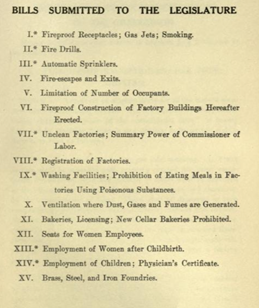
“Bills submitted to the legislature” (Preliminary report of the Factory Investigating Commission, 1912).

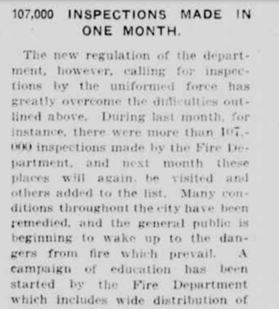
"107,000 Inspections Made in One Month"

​​​​​​​(New York Tribune, 1914).

"107,000 INSPECTIONS MADE IN ONE MONTH.

... During last month, for instance, there were more than 107,000 inspections made by the Fire Department, and next month these places will again be visited and others added to the list. Many conditions throughout the city have been remedied, and the general public is beginning to wake up to the dangers from fire which prevail..."

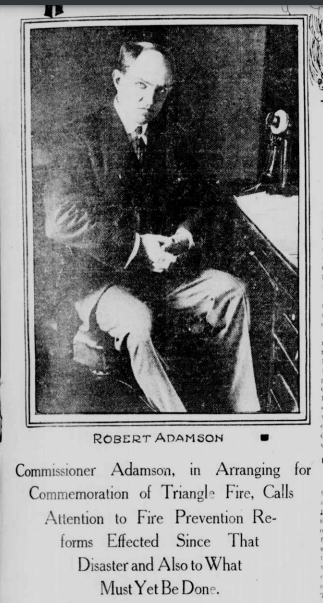
"Commissioner Adamson, in Arranging for the Commemoration of Triangle Fire, Calls Attention to Fire Prevention Reforms ..."

​​​​​​​(New York Tribune, 1914).

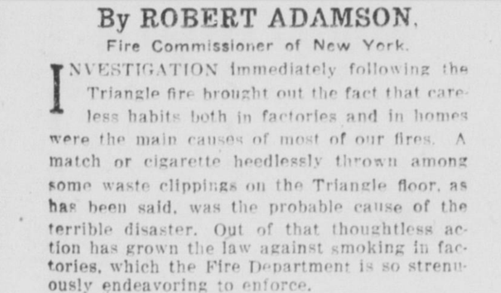
"By ROBERT ADAMSON

Investigation immediately following the Triangle fire brought out the fact that careless habits both in factories and in homes were the main causes of most of our fires. A match or cigarette heedlessly thrown among some waste clippings on the Triangle floor, as has been said, was the probable cause of the terrible disaster. Out of that thoughtless action has grown the law against smoking in factories, which the Fire Department is so strenuously endeavoring to enforce."

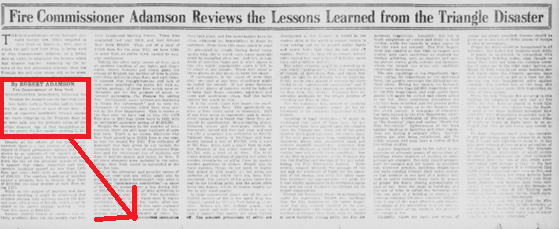
​​​​​​​"Fire Commissioner Adamson Reviews the Lessons Learned from the Triangle Disaster" (Atlanta Georgian 1914, Library of Congress).


In 1911, New York passed the Sullivan-Hoey Law. “The City enacts the Sullivan-Hoey Fire Prevention law, which clarifies the responsibilities of the different city agencies with respect to code promulgation, inspections, and enforcement. The City’s Municipal Building Code becomes more safety oriented: sprinkler systems must now be installed in all factories, as well as lighted exit signs, exit doors that open outward, and on-site fire-fighting equipment. Systemic issues are also addressed, including the problems of evacuating large groups from high-rises and the storage of flammable materials in public buildings” (Robinson & Robinson, p. 7).

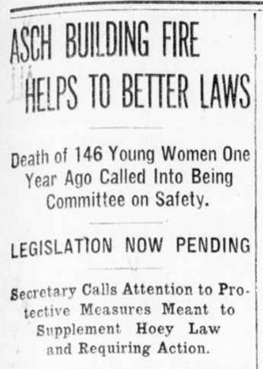
(New-York Tribune, March 25, 1912).

(New-York Tribune, March 25, 1912).

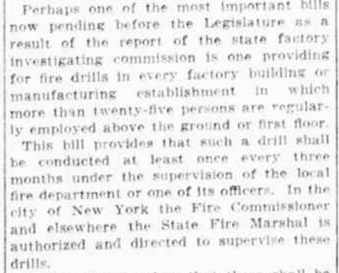
"Perhaps one of the most important bills now pending before the Legislature as a result of the report of the state factory investigating commission is one providing for fire drills in every factory building or manufacturing establishment ..."

"...the State Fire Marshal is authorized and directed to supervise these drills"


In 1912, the New York Bureau of Fire Prevention let Fire Chiefs inspect factories and required ventilation, alarms, sprinklers, and owner responsibility for sanitation and worker comfort.
 The Roman Catholic Diocese of Brooklyn said, “The workers have a right to life, and it comes before our right to the ease and luxury that flow to the community through the production of wage earners.” A priest criticized employers, saying, “We have put property rights above life” (Marsico, p. 64).

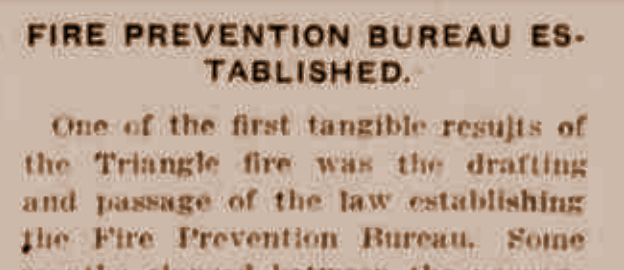
"One of the first tangible results of the Triangle fire was the drafting and passage of the law establishing the Fire Prevention Bureau."

(New York Tribune, 1914).