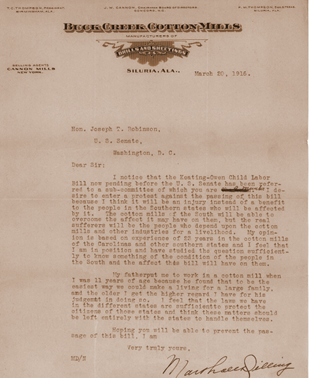
“Letter from Marshal Dilling Opposing Keating-Owen Child Labor Bill” (National Archives Catalog, 1916).
The FIC’s report emphasized, "Health is the principal asset of the working man and working woman," and the government "is bound to do everything in its power to preserve the health of the workers” (Department of Labor).
From 1911–1914, unions like the ILGWU spurred 36 New York laws on labor safety, addressing sanitation, child labor, work hours, and workplace injuries. In 1913, the U.S. Department of Labor (DOL) was created to protect workers.
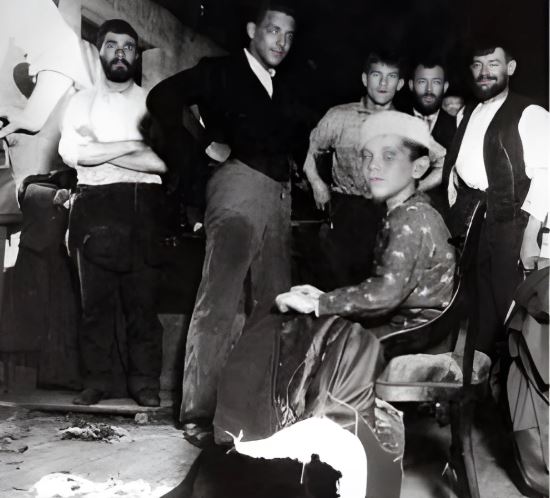
"The FIC investigated child labor and the harsh conditions under which children worked" (Marsico, p. 59).
In 1916, Congress passed the Keating-Owen Act, banning goods made by child labor. Cotton mill manager, Marshal Dilling, opposed it, writing to a senator. “I think it will be an injury instead of a benefit to the people in the Southern states who will be affected by it” (National Archives Catalog, 1916). President Wilson signed the act, but the Supreme Court overturned it in 1918.
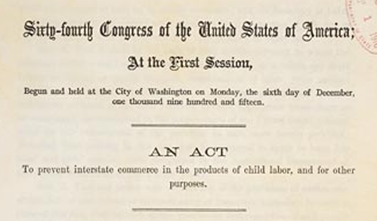
“Keating-Owen Child Labor Act 1916” (National Archives, 1916).
“Letter from Marshal Dilling Opposing Keating-Owen Child Labor Bill” (National Archives Catalog, 1916).
"Dear Sir:
I notice that the Keating-Owen Child Labor Bill now pending before the U.S. Senate has been referred to a sub-committee of which you are a member. I desire to enter a protest against the passing of this bill because I think it will be an injury instead of a benefit to the people in the Southern states who will be affected by it. The cotton mills of the South will be able to overcome the affect it may have on them, but the real sufferers will be the people who depend upon the cotton mills and other industries for a livelihood..."
"I feel that the laws we have in the different states are sufficient to protect the citizens of those states and think these matters should be left entirely with the states to handle themselves...."
[Signed: Marshal Dilling]
In 1919, Congress passed the Child Labor Tax Law, imposing a 10% tax on companies employing children. The Supreme Court found it unconstitutional: "The power of Congress to regulate interstate commerce does not extend to curbing the power of the states to regulate local trade” (National Archives, 2022).
“The Triangle factory fire was a galvanizing moment, calling American leaders to reexamine their approach to workplace conditions and the purpose of unions. The fire awakened the conscience of our Nation, inspiring sweeping improvements to safety regulations both in New York and across the United States. The tragedy strengthened the potency of organized labor, which gave voice to previously powerless workers” (President Obama, 2011).
This tragedy nationalized workplace safety movements, becoming the foundation of safety and labor laws today.